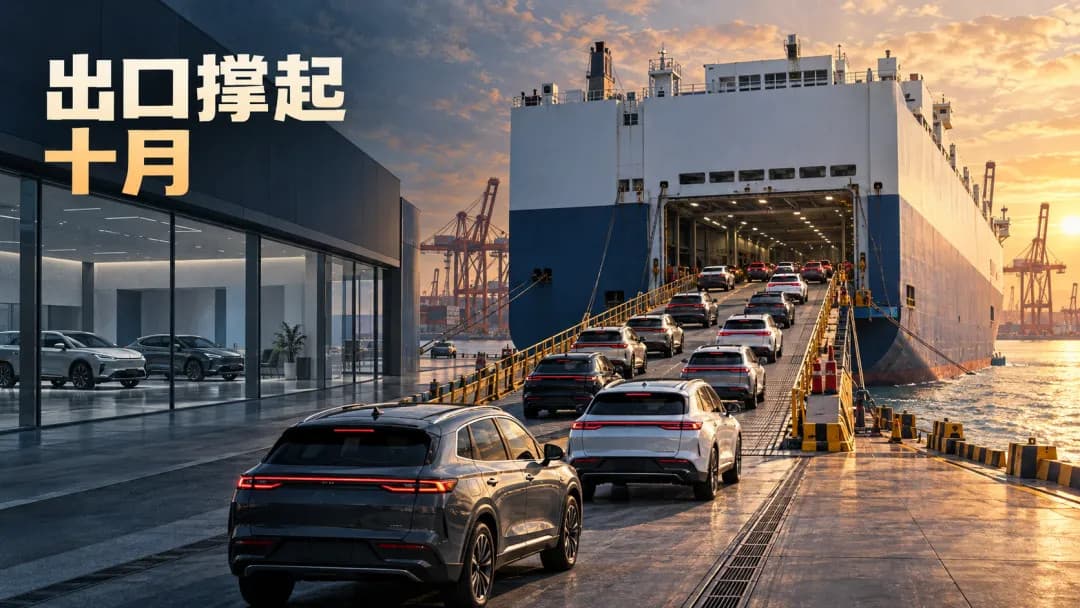
D1EV reported that the five largest Chinese auto groups by sales sold a combined 1.76 million vehicles in October, almost unchanged from 1.762 million a year earlier, as overseas growth offset a sharp domestic decline. Their combined overseas sales reached 743,000 units, up 83% year-on-year, while domestic sales fell to 1.018 million units, down 25%.
BYD, SAIC, Geely, Chery and Changan were the five groups in the comparison. The split between overseas and domestic sales was stark even though the headline total was nearly flat.
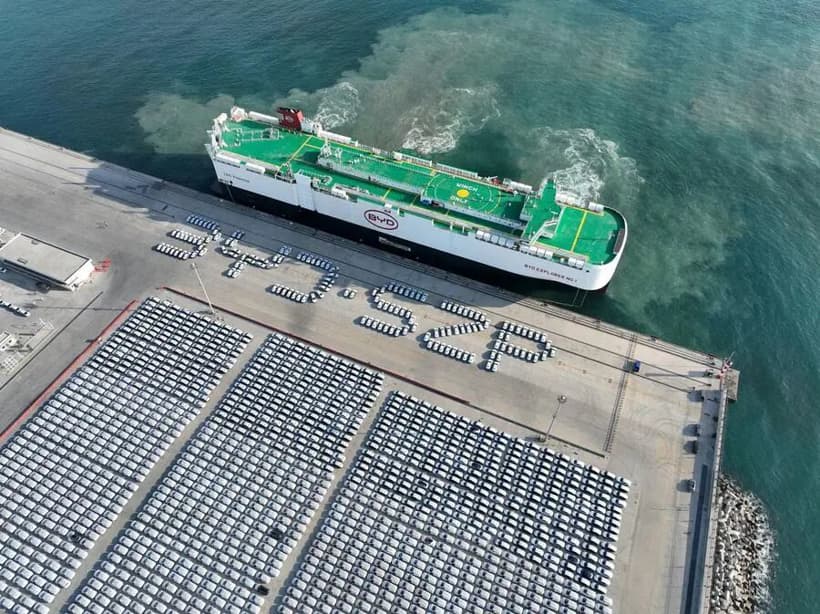
BYD sold 490,200 vehicles in October, up 11% year-on-year and its highest monthly sales of the year. It sold 169,600 passenger vehicles and pickups overseas. That overseas volume first offset a domestic shortfall of 38,000 units from a year earlier, with the remaining 48,000 units accounting for the reported growth.
SAIC sold 163,000 vehicles overseas in October, up 67%, but its domestic sales fell by 89,000 units, leaving total sales down 5.3% year-on-year.
Changan sold 102,400 vehicles overseas, up 77% year-on-year and 8.8% from September. Its domestic sales fell about 40%, and total sales were down by 44,000 units from a year earlier.
Chery Group sold 296,000 vehicles in October, including 200,600 overseas. Its domestic wholesale volume was less than 100,000 units, about 60% of the year-earlier level.
Great Wall Motor sold 120,000 vehicles in October, including 62,900 overseas. That left about 58,000 units in China, less than the global sales of its Haval brand alone.
An earlier estimate from the China Passenger Car Association placed national passenger vehicle retail sales in October at about 1.6 million units, about 650,000 fewer than a year earlier, down 28.9%.
Exports offset weakness at home
The same pattern extended beyond October.
Changan sold 727,000 vehicles overseas in the first three quarters, up 56%, with more than 270,000 sold overseas in the third quarter alone. It has set a full-year target of 1 million overseas sales. Its Brazil plant started production in March, and by October it had built more than 350 sales and service outlets across 15 European countries.
Nationally, China exported 8.205 million vehicles in the first three quarters, up 66% year-on-year, while the domestic auto market contracted.
Joint-venture brands and low-priced older models fell fastest
Joint-venture brands continued to decline in October.
SAIC-GM sold 25,865 vehicles, down by more than half year-on-year and down by one-third from September. SAIC Volkswagen sold 67,500 vehicles, down 28%. GAC Toyota sold 53,000 vehicles, down 25%.
The lowest price band has also weakened after subsidy rules changed.
In 2025, the trade-in subsidy for scrapping an old vehicle and buying a new energy vehicle was a fixed RMB 20,000 whether the new vehicle cost RMB 50,000 or RMB 500,000.
In 2026, the subsidy changed to 12% of the vehicle price, capped at RMB 20,000. A vehicle price of about RMB 167,000 is needed to receive the full amount.
Under that formula, a small electric car priced at RMB 50,000 would receive RMB 6,000, down RMB 14,000 from last year. A vehicle priced at RMB 150,000 would receive RMB 18,000, only RMB 2,000 less than under the previous rule.
Fuel vehicle sales were also under pressure. In September, fuel vehicle retail sales fell 43% year-on-year, and pure internal-combustion models fell 49%. Fuel vehicles accounted for less than one-third of retail sales for the first time. Standard hybrids wholesaled 125,000 units in September, up 51%, the fastest growth among all powertrain types.
New-platform models kept growing
Several newer new energy vehicle brands and model lines continued to grow in October.
Leapmotor delivered 106,000 vehicles, up 51% year-on-year and above 100,000 for the fourth straight month. Its 2 millionth vehicle is due to roll off the line in November.
Geely Galaxy sold 153,000 vehicles, up 20% year-on-year and 17.6% higher than in September. Changan Qiyuan sold 63,600 vehicles, up more than 70% from a year earlier.
Hyptec Aion sold 42,400 vehicles, up 57%, marking eight straight months of year-on-year growth. The Aion i60 has reached 100,000 deliveries. The Ray7 has a pre-sale price range of RMB 128,800 to RMB 158,800, and received more than 6,800 orders in two hours.
BAIC Arcfox sold 26,300 vehicles in October, up 13%. Its sales for the first 10 months reached 161,800 units, up 46%.
XPeng delivered 50,237 vehicles in October, a record high and about 8,200 more than a year earlier. Overseas deliveries were 13,326, about 8,300 more than a year earlier, meaning the increase came entirely from overseas markets.
Xiaomi delivered more than 50,000 vehicles in October, versus more than 40,000 a year earlier. Its range-extended model launched in September, and October was its first full delivery month.
Zeekr delivered 32,483 vehicles, up 52% year-on-year. Its January-October deliveries reached 321,000 units, already above its full-year target of 300,000. Its exports topped 10,000 units for a second straight month, and the Zeekr 9X has started shipping to Europe.
Denza sold 15,152 vehicles, up 49.5%. The Nio brand delivered 18,125 vehicles, up 5.7%.
Most annual targets still look difficult
By the end of October, only Zeekr had exceeded its full-year target, reaching 107% of the goal.
Chery Group had completed 78% of its annual target, Leapmotor 77%, and Geely 74%. BYD and SAIC were both at about 72% if measured against the 5 million targets widely cited by the media. Changan, Xiaomi and Great Wall were each at about 58%.
Based on those targets, Geely would need monthly sales of 452,000 vehicles in November and December, 1.5 times its October level. BYD would need 689,000 per month, or 1.4 times October. SAIC would need 711,000 per month, or 1.7 times October. Xiaomi would need about 115,000 deliveries per month, more than twice its October volume.
Changan would need 687,000 monthly sales, close to three times its October result. Great Wall would need 380,000 per month, or 3.2 times October, after already lowering its full-year target from 2.49 million earlier in the year.
Only Leapmotor and Chery were still within closer reach. Leapmotor would need monthly sales 7% above October, while Chery would need 18% more.
More than 1,800 dealerships exited networks in the first half, limiting channel capacity. On October 12, the Ministry of Finance and the State Taxation Administration announced that the VAT export rebate for new energy vehicles will be reduced to 9% from 13% starting on April 1, 2027, raising export costs for low-margin models that compete on price overseas.