D1EV reported that Zhuoyu Technology said its intelligent driving system for commercial vehicles can recover its cost in about one year, based on fuel savings of RMB 20,000 to RMB 30,000 a year. Executives also said intelligent driving system penetration in commercial vehicles was likely below 1% last year, while the company has signed partnerships with six major heavy-truck brands in China.
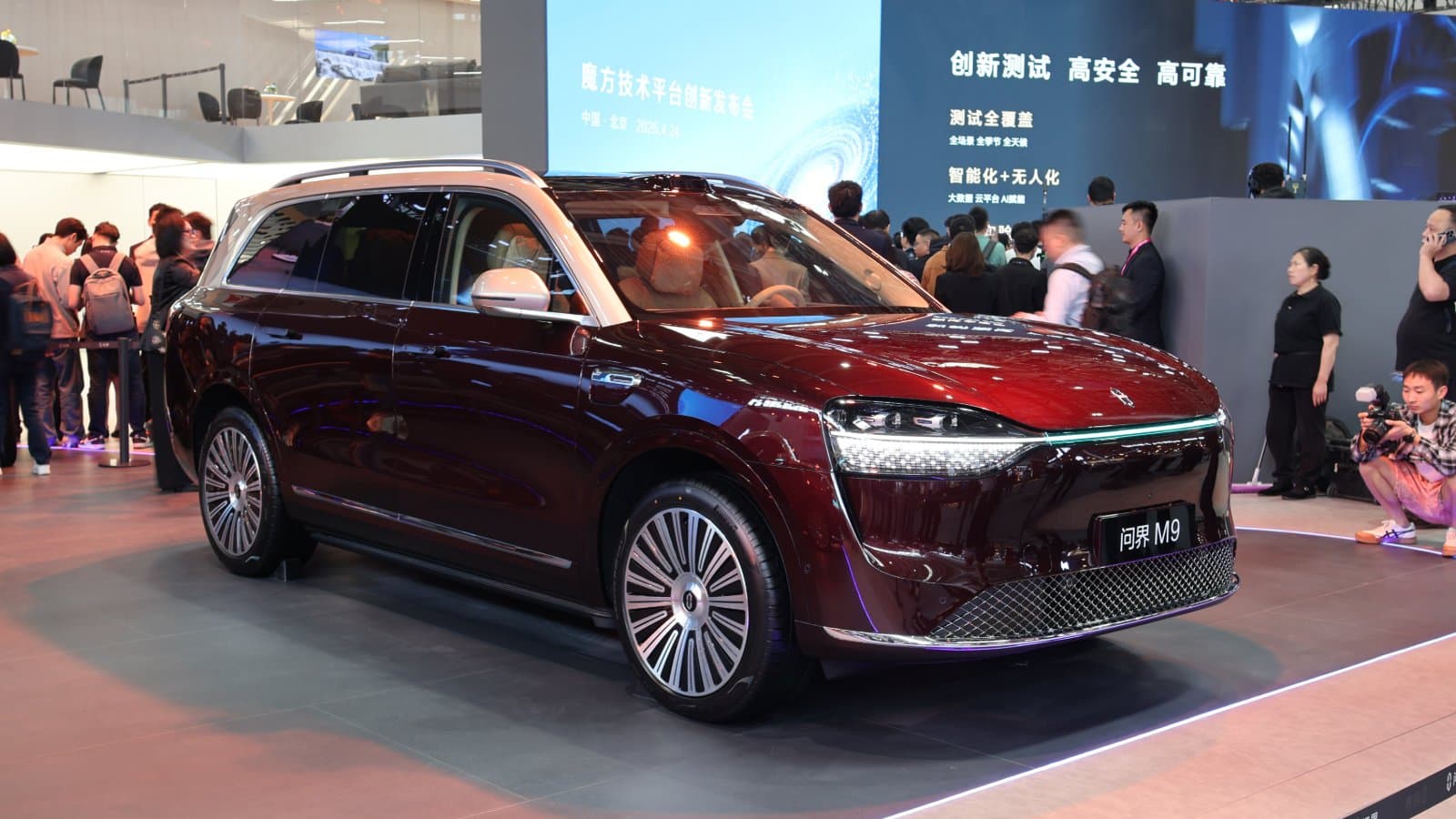
Zhuoyu CEO Shen Shaojie and Vice President of Commercial Vehicle Business Liu Sikang spoke to media on October 29 after the company's Panxing commercial vehicle technology launch event.
Shen said commercial vehicle customers make decisions based on payback rather than user experience. He divided the market into large express and freight fleets and individual owners in the less-than-truckload segment, saying the latter are more sensitive to costs because they pay out of pocket and want to know how long it will take to recover the extra spending.
He said heavy commercial vehicle sales were about 1.14 million units last year, and about 30% of that was for export.
Liu said intelligent driving system shipment penetration in commercial vehicles may have been below 1% last year, compared with more than 30% for standard-fit and optional L2+ systems in passenger vehicles. Shen said the main reason for the low penetration rate was cost. He said installation rates would rise once the economics worked.
On business models, Shen said buyout, subscription, and insurance-linked models could all be explored, but the basic calculation had to be clear first, including system cost and annual savings.
Partnerships and competition
Zhuoyu announced partnerships with XCMG Auto, Shaanxi Auto Group, Sinotruk, FAW Jiefang, Foton, and Dongfeng Commercial Vehicle. The company said those six brands account for more than 93% of China's domestic heavy-truck market.
Shen said the partnerships were won through product competitiveness. He said existing vertical players' solutions cost several times more than Zhuoyu's and performed worse than newer end-to-end solutions, especially in energy-saving capability.
He said competition would increase once the market proved to have significant potential, and that competitors might come not only from existing commercial vehicle players but also from passenger vehicle intelligent driving companies.
Liu said competition in commercial vehicle intelligent driving had not fully opened up yet, but once it did, development could move faster than in passenger vehicles. He said passenger vehicles took at least 10 years, while commercial vehicles could see an outbreak trend in the next two to three years if commercialization paths are proven.
Shen said scale and cost control would be hard thresholds. He added that before a mass-production data flywheel is established, companies have to pay to collect data themselves, and commercial vehicle data collection costs several times more than passenger vehicle data collection because fuel and tolls are more expensive.
One base model, different vehicle types
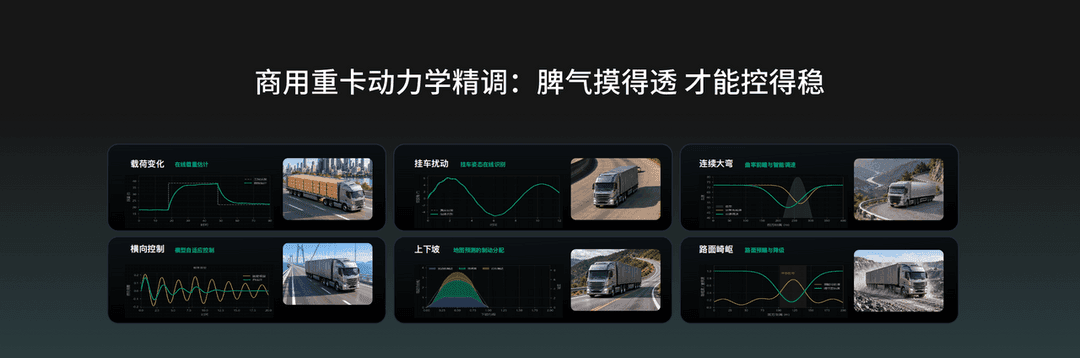
Liu said Zhuoyu has worked on an end-to-end base model for several years and is now using that model to validate new categories rather than writing new algorithms and adding extra code. He said it took two to three months last year to get the system running on heavy trucks and three to four months this year to get it running on buses.
He said the biggest commonality between passenger and commercial vehicles is understanding the surrounding environment, but how each vehicle should be driven differs greatly. He said adapting the same "brain" to a bus or truck still requires a different "cerebellum," sensors, and cameras.
Liu said Zhuoyu uses mixed training with passenger vehicle and commercial vehicle data instead of building a separate dataset on the same scale as its 3 billion km of passenger vehicle data. He said that requires adjustments in model structure, data mix, and evaluation and testing processes.
On urban NOA for heavy trucks, Liu said 99% of trunk logistics runs on highways, so urban functions for heavy trucks have neither market demand nor an easy technical path in the near term. He said urban NOA is more suitable for light trucks and buses.
Safety and validation
Shen said the biggest variable for commercial vehicle intelligent driving over the next five to 10 years is safety. He said one severe accident could wipe out the business, and that the consequences of problems in commercial vehicles are much more serious than in passenger vehicles.
Liu said getting a proof of concept running in one or two months is different from mass-production development, which took more than a year, with most of that time spent on safety validation. He said truck MPI requirements for market approval are more than 10 times those of passenger vehicles.
He also said passenger vehicles are generally designed for 200,000 km to 300,000 km, while trucks start at 1.5 million km, leading to much longer DV and PV testing cycles for hardware and software.
Highway NOA and operating metrics
Shen said the core task for highway NOA in trucks is not ramp handling but dealing accurately with complex road situations such as roadworks, cut-ins, obstacles, and changing traffic conditions. He said a single-box L2 system cannot handle those scenarios even if the truck is driving in a straight line.
Liu said ACC and single-lane-keeping systems can save fuel and are cheaper, but they cannot deliver the same level of safety, ease of use, or savings as higher-end systems.
He said Zhuoyu is also developing functions based on customer demand, including anti-fuel-theft features, transparent chassis view, sentry mode, around-view monitoring, and fault diagnosis. For trailers, which often lack sensors, the company uses two rear-view cameras to judge trailer status.
Liu said fleets already test added value by comparing fuel consumption and safety indicators against experienced drivers and other L2+ heavy trucks on the market. After Zhuoyu and Shaanxi Auto deliver mass-production vehicles to customers, the vehicles will be calibrated on actual routes to check real fuel-saving rates and intelligent driving activation rates against fleet targets.
Shen said the simplest indicator for whether a commercial vehicle program has gained a foothold is mileage share. He said if more than 90% of mileage is driven using highway NOA, that would be a good result.