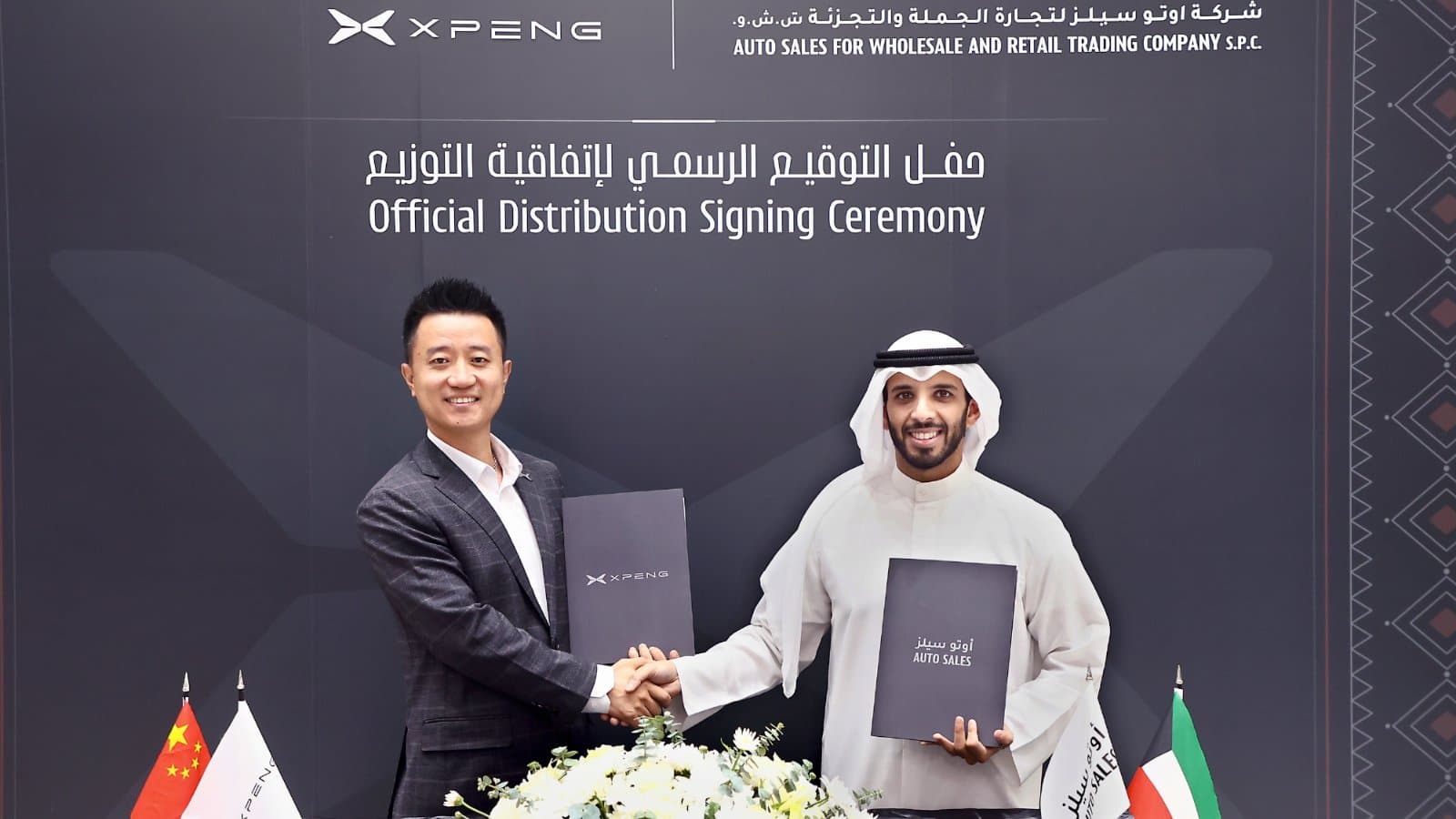
CnEVPost reported that Xpeng will launch its GX and G9L flagship SUVs in the Middle East next week and announce local pricing. The company also signed distribution agreements in Nigeria, Oman, Kuwait and Albania, taking its overseas sales network to more than 1,200 stores across 83 countries and regions.
The company did not say which countries will host next week's launches, what configurations will be offered, or when local deliveries will begin. GX orders in the Middle East have approached 4,000, and large-scale shipments to the Middle East and Africa are underway.
Xpeng said it will work with local partners to introduce models, build brand awareness and establish service networks. It recently held technical briefings on its Kunpeng Super Range Extension technology in the United Arab Emirates, Qatar and Kuwait ahead of the GX's entry into Gulf markets.
The GX launched in China on May 20 as a full-size, 6-seat SUV offered in battery electric vehicle and extended-range electric vehicle versions. On October 22, cumulative GX deliveries surpassed 30,000 units, about 5 months after launch. The model delivered 7,224 units in September, accounting for 17.51% of Xpeng's total deliveries that month.
The G9L launched in China on September 17 with a 5-seat layout and both BEV and EREV options. Xpeng introduced the model in Europe at the Paris Motor Show on October 12, offering an all-electric version with 6-seat and 7-seat layouts. The latest Middle East announcement did not specify seating layouts or powertrain options for the region.
Overseas markets are taking a larger share of Xpeng's volume. In September, overseas sales reached 10,055 units, exceeding 10,000 for the first time and rising 100.94% year-on-year. In the first 9 months of 2026, overseas sales rose 100.11% year-on-year to 59,479 units, accounting for 20.92% of total deliveries, up from 9.49% a year earlier. Over the same period, total deliveries fell 9.20% year-on-year to 284,367 units.
VW weighs wider use of Xpeng-linked architecture
Separately, CnEVPost reported that Volkswagen is considering using an electrical and electronic architecture co-developed with Xpeng for mainstream models in Europe.
Germany's Manager Magazin, cited in that report, said the China Electronic Architecture, originally developed for the Chinese market, could underpin future models from Volkswagen, Skoda and Cupra. Volkswagen core brand chief Thomas Schaefer was expected to present the proposal to group management on October 27, covering about 75% of next-generation models across the 3 brands.
Volkswagen currently uses the architecture co-developed with Xpeng in China, while working with Rivian on separate technology for Western markets. The Rivian partnership involves a $5.8 billion investment.
Schaefer's team estimates that switching to the Chinese architecture for key vehicle segments could save the group €4 billion to €5 billion. Potential applications mentioned in the report include future electric models such as the ID. Golf, ID. Passat and Skoda Enyaq.
Supporters of the proposal argue that the software and electrical and electronic architecture developed by the Chinese team are already in use and can support vehicles built on the group's existing European platforms. Internal concerns remain about the cost of adapting the architecture to European regulations and about technical risks tied to further development.
Volkswagen and Xpeng began their strategic partnership in July 2023, when Volkswagen announced a $700 million investment in the Chinese company and plans to jointly develop 2 Volkswagen-branded battery electric models for China. In August 2025, the companies expanded that cooperation to extend the jointly developed architecture beyond battery electric platforms to Volkswagen's internal combustion engine and plug-in hybrid platforms in China.
Xpeng said at the time that deploying the architecture across platforms and powertrain types could accelerate software iteration and over-the-air updates, shorten vehicle development cycles and deliver greater economies of scale.


