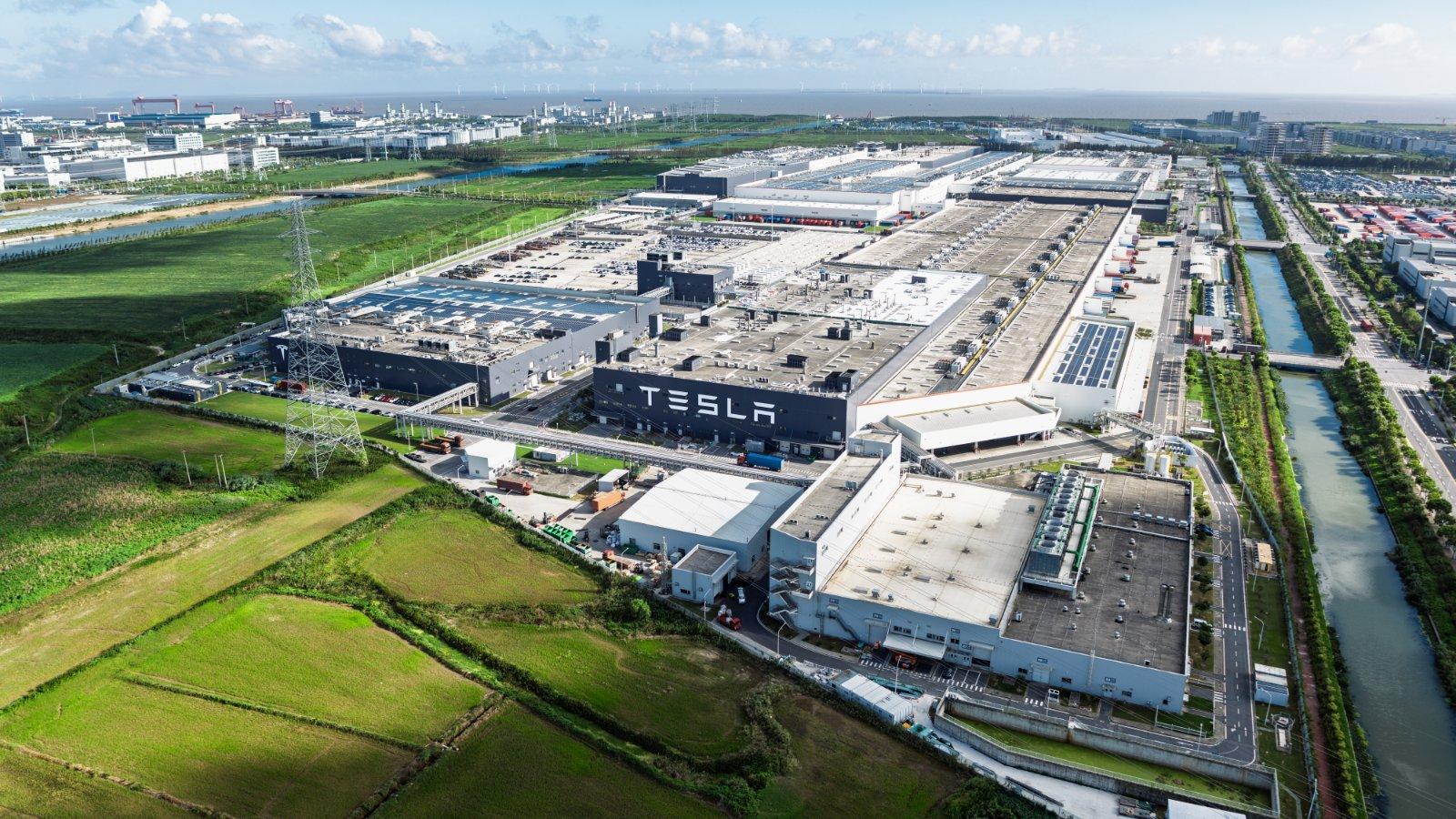
Tesla has raised the parts localization rate at Gigafactory Shanghai to 98%, CnEVPost reported, citing an official Tesla press release issued during the ninth China International Import Expo in Shanghai on November 6.
The new figure is higher than the “over 95%” level Tesla had used to describe the plant’s parts localization rate over the past several years.
Tesla has signed up more than 400 local tier-1 suppliers in China, and more than 60 of them have entered its global supply chain system. The company also said its work with Chinese suppliers has expanded from manufacturing into product development.
One example is the Model Y L. Tesla said comfort features including the armrest and leg supports on the model’s seats were co-developed with Chinese suppliers to suit local user needs. The model was first launched in China, then entered Asia-Pacific markets including Japan, South Korea, and Australia, and was launched in the US market in July 2026.
This year is also the fifth anniversary of the completion of Tesla’s Shanghai R&D and Innovation Center.
Gigafactory Shanghai broke ground in January 2019 and began production at the end of the same year. It is China’s first wholly foreign-owned vehicle manufacturing project. The plant has annual production capacity of about 1 million vehicles and mainly produces the Model 3 and Model Y.
Tesla said about 93.3% of the plant’s total floor area of roughly 730,000 square meters is used for production workshops. It said the factory has no lavish reception halls or executive-only dining rooms and elevators, with more space and supporting resources devoted to manufacturing instead.
The plant currently maintains a production pace of one vehicle rolling off the line every 30-plus seconds on average. Its industrial waste utilization rate is kept above 94%.
CIIE display
At its booth at the 2026 China International Import Expo, Tesla displayed the recently launched Model Y Performance, an exploded-parts display of the Model Y shown for the first time, a humanoid robot, and the Cybercab.
The Cybercab was described as a driverless electric vehicle without a steering wheel or pedals. The source also included images from Tesla’s booth showing the vehicle on display alongside Optimus robots and a battery pack exhibit.
Deliveries and Shanghai output
As of the third quarter of 2026, Tesla’s cumulative global vehicle deliveries had surpassed 10 million units.
Data released earlier in the week by the China Passenger Car Association showed Tesla China’s wholesale sales in October were 67,829 vehicles, up 10.30% year-on-year and down 28.88% month-on-month.
In the first 10 months of 2026, Gigafactory Shanghai’s cumulative wholesale sales, including domestic deliveries and exports, reached 810,889 vehicles, up 21.42% year-on-year.
The source also included monthly wholesale figures for the first three months of 2026. Tesla China sold 69,129 vehicles in January, 58,599 in February, and 85,670 in March.
For comparison, the figures shown for the same months in 2025 were 63,238 in January, 30,688 in February, and 78,828 in March. The figures shown for the same months in 2024 were 71,447 in January, 60,365 in February, and 89,064 in March.
The updated localization figure adds another detail to Tesla’s position in China, where its largest production base is tied closely to domestic suppliers both in parts sourcing and in product work that has already appeared in vehicles sold in China and later introduced in overseas markets.


